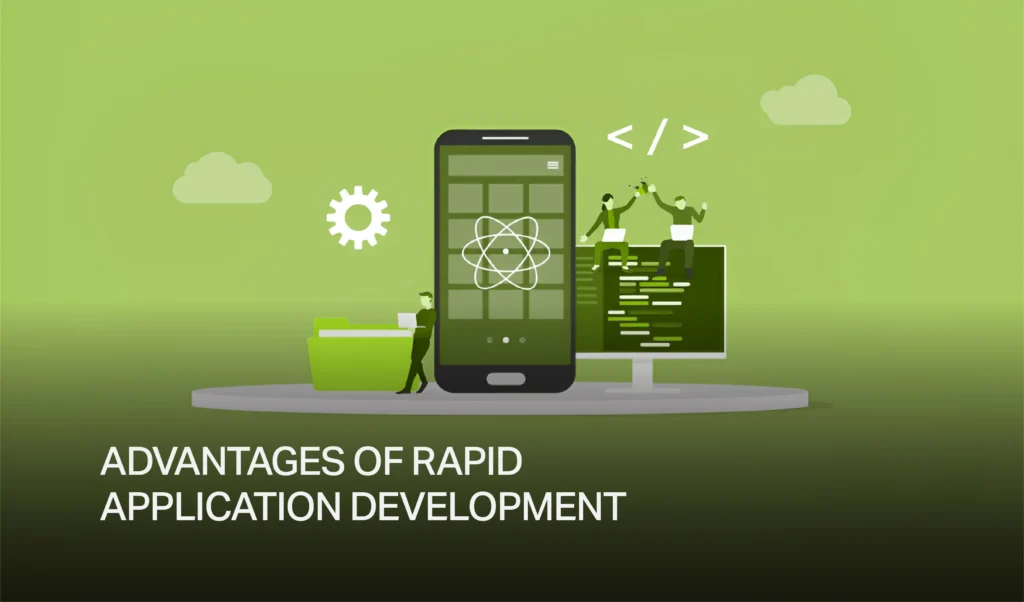
After talking to multiple senior development managers at fast-moving tech firms, we have observed that whether a project will wing or hold back entirely depends on the approach taken. This is why Inovva Designz came up with an idea that combines all the advantages of rapid application development. In our long journey of creating custom websites, this methodology has proven as a game-changer for us.
And now it’s time you share it with our readers, too. With Rad methodology, we reduced delivery time, improved user feedback, and aligned our teams on real value that’s not just about code. If your business also needs to accelerate its speed, flexibility, and results, then a rapid software development model may be the place you can start from.
Rapid Application Development: The Smarter Shortcut For Software
Before we jump into its advantages and technicalities, we want to have a clear idea of it. Rapid application design or RAD methodology is a form of incremental software development. In simple words, it’s a software development path that prioritizes speed and flexibility through rapid prototyping and quick iterations.
Not like the traditional big-bang models, it emphasizes prototypes, frequent user feedback, and multiple iterations at a time. In the tech soul, this rapid application development model speeds up the development cycle by constructing functional modules. That quickly, and refining them with real user data and input.
Why Smart Teams Choose Rapid Application Development
Choosing rad development only makes sense when you want to beat the time limit, improve the response to progress the user needs, or want to keep your audience busy in the process.
- Because it lowers the risk of misaligned features, users can review prototypes early.
- It keeps your project agile according to the user expectations or project requirements changes.
- Development teams benefit from early visibility into progress and direction, helping them stay aligned with business goals and software development best practices.
Prominent Advantages of Rapid Application Development Methodology
Here are the most prominent benefits of rapid application development that have helped many organizations and development managers in gaining the best results.
Beat The Time Limit
One of the most obvious advantages of rapid application development is speed. The rapid application model enables you to launch functional design early and repeat faster than traditional models. So, your business can answer the market demands faster, stay on top, and start collecting user feedback earlier.
Underline Flexibility & Adaptability
As the RAD methodology involves continuous replays and prototypes, you can easily cater to changes in project requirements without disturbing the whole process. This flexibility supports dynamic markets and evolving user behaviors.
Offer Better User Feedback
The rapid software development addresses the user feedback that is built into the process from the first stages. Which means you catch issues, upgrade features, and improve alignment according to user expectations early. By involving users and stakeholders, the final product makes sure that it matches their needs better.
Economical & Reduced Risk
We all need to say thanks to shorter development cycles. It reuses components and does constant evaluation, which drops the overall failure risk of a large-scale system. The advantage of RAD in this stage is that you don’t wait until the end of the process to find major issues. Budget surprises and late-stage rework are not likely to happen.
Strong Collaboration Between The Team
When you work with a rapid application development model, developers, designers, business analysts, and end-users all work more closely together. That enhances team collaboration and helps align the product with business goals. The risk of miscommunication is reduced between the team. If collaboration and user experience are your priorities, our UI/UX design services can help you bridge creativity and functionality.
Frequent Prototyping & Visible Progress
A sign of the rapid application development methodology is a prototype. That driven development, with each iteration, produces a working module, enabling progress. Seeing progress early keeps teams motivated and stakeholders engaged.
When to Use RAD and When to Avoid It
The rapid application design approach accelerator the process in some specific conditions, so let’s have a review of when to use RAD and when not.
When Use RAD
- Your project requirements are fairly clear but likely to evolve.
- Time-to-market is critical.
- You need ongoing user feedback and frequent updates.
- You can organize your work into modular chunks.
When Avoid RAD
- The project is extremely large, highly complex, or requires rigid compliance and architecture.
- Your team lacks sufficient experience, and user involvement is minimal.
- You need extensive upfront documentation and design.
Explaining How RAD Works: A Simple Guide
Here’s how the RAD methodology generally carries a rapid application development model to provide better software:
- Requirements Planning: Define goals and create a high-level plan.
- User Prototyping: Build quick prototypes; gather feedback and iterate.
- Construction: Develop modules in parallel; integrate, test, and refine.
- Deployment: Finalize, train users, and launch.
Going through these steps will make sure your development process remains nimble and aligned with user and business needs.
FAQ’s: Quick Answers
What do you mean by RAD?
RAD stands for rapid application development. It is a model that is based on iterative development with prototypes, where the speed of development and obtaining user feedback are the most important criteria.
What is rapid application development?
Rapid application development is a software development process that focuses on rapid prototyping and the quick and repeated development of prototypes rather than excessive up-front planning.
How does rapid application development work?
Rapid application development breaks projects into smaller pieces, builds prototypes, and refines prototypes through user feedback, focusing on delivering products in shorter development cycles.
What is RAD methodology in project management?
RAD methodology is a project management style that aligns with the RAD model in stress user engagement, reuse, flexibility, and early deliverables.
When to use rapid application development?
Use it when you need quick turnaround, evolving requirements, strong user involvement, and modular development.
Why use rapid application development?
To realize the advantages of rapid application development: rapidness, flexibility, cost savings, increased user alignment, and reduced risk.
Final Touch
If your business is prepared for quickened delivery, faster reacting to market demands, and quicker software alignment to the actual user needs, the advantages of rapid application development are obvious. At Innova Designz, we take you through the rapid development cycle, allowing your product to meet the needs of users and implement business objectives truly. To make your software vision a reality, explore our app development and web development services for scalable, custom-built solutions.
Are you ready to experience the benefits of rapid application development? Contact us today to build your next digital project together.